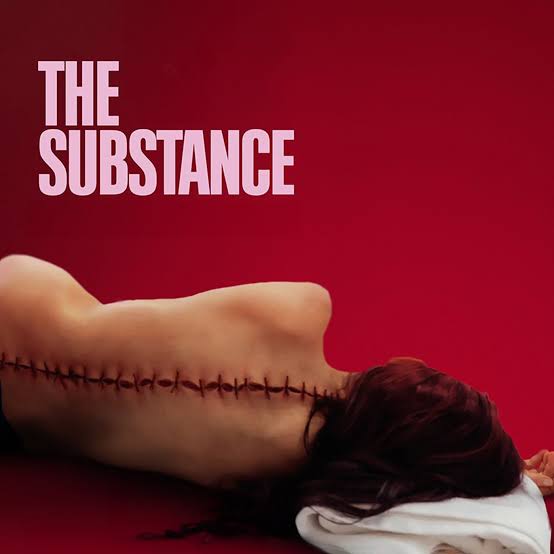
Demi Moore stars in the titular role of Elisabeth Sparkle, a has-been fitness instructor desperate to reclaim her fading television career. As always, if you haven’t seen the film yet, consider this your spoiler warning.
Obsessed with staying relevant, Elisabeth turns to a black-market serum that transforms her into a younger, more glamorous version of herself: Sue (played by Margaret Qualley). The catch? The transformation only lasts seven days before the bodies switch back without exception. At first, Sue embodies everything Elisabeth once aspired to be—and more. But as Sue’s reckless, hedonistic tendencies take over, Elisabeth is pushed into the shadows, reduced to an aging recluse biding her time until she can reclaim Sue’s body for another fleeting week of youth.
As Sue’s career skyrockets, Elisabeth spirals deeper into insecurity, unable to face her deteriorating original form. Confined to her home and television, she lives only for the brief moments she can return to Sue’s vibrant life. Yet with each switch, the toll on Elisabeth’s body worsens, exacerbated by Sue’s increasingly volatile behavior, which threatens the delicate balance required for the serum to work. Despite the mounting risks, Elisabeth remains ensnared by the serum’s allure, clinging to the intoxicating promise of beauty and relevance, even if only for a week at a time.
While the ending may stretch believability, it delivers a poignant critique of the relentless pressure to maintain youth in an industry that idolises beauty and vitality. With a punchy score and choppy, edgy cinematography, The Substance injects a frenetic energy that keeps viewers on edge, eagerly anticipating what will happen next. Demi Moore and Margaret Qualley’s powerhouse performances elevate the film’s tragic arc, making its bleak conclusion all the more devastating—a chilling commentary on the desperate desire for fame and relevance.
In all its vapid glory, this modern satirical horror not only entertains but also prompts reflection on the value of authenticity and the fleeting nature of life. At least, that’s how I felt after watching it. Life is short, and living it the same way over again feels futile. Yet Elisabeth and Sue are no different from each other—both thrive on attention and admiration, unable to exist without it. Are there really people like this? How far is art imitating life?
Few films tackle this subject so effectively. With weeks of hype following its release on MUBI, The Substance is poised to secure its place as one of the year’s best films—and deservedly so. Reminiscent of body-horror classics like Death Becomes Her, Invasion of the Body Snatchers, The Fly, and even Freaky Friday, The Substance weaves a dark, cautionary tale of beauty, ambition, and the relentless pursuit of admiration. Director Coralie Fargeat seems to draw inspiration from modern obsessions with Botox, fillers, and weight-loss drugs like Ozempic, crafting a sharp critique of society’s fixation on eternal youth and relevance—a fixation magnified by today’s social media trends and tabloid fascination with the rich and famous. Reflecting on the film’s subject matter, Fargeat captures the poignancy of this struggle, particularly for women, remarking on the violence of self-image as a constant battle: “I don’t blame anyone for still wanting to exist.”
 Nadia Cheung